
We are here to meet all your bulk shipping needs. If you have questions about any of the transportation services that Bulkmatic offers or wish to reach us, please contact us. We’d love to hear from you.


Flexible Bulk Capacity Without Compromising Control
How Bulkmatic’s asset-backed brokerage model can extend specialized capacity, strengthen continuity, and simplify accountability for bulk shippers
A practical guide for supply chain, procurement, and operations leaders
Key Takeaways
- Specialized bulk capacity is not interchangeable. Equipment, commodity, wash, facility, and service requirements determine which carriers can safely and reliably handle a shipment.
- An asset-backed brokerage model expands options. Shippers gain access to qualified partner carriers while retaining the operating perspective of an experienced bulk fleet.
- Centralized accountability reduces complexity. One transportation partner can coordinate multiple capacity sources, service expectations, and recovery options.
- Flexible capacity supports both resilience and growth. The same model that protects urgent shipments can also support recurring overflow, new markets, and broader modal coverage.
Executive Summary
Bulk shippers operate in a market where capacity can be available in one lane and scarce in the next. Specialized equipment, product-handling requirements, wash protocols, and service expectations narrow the pool of carriers able to move each shipment. When planned capacity falls through, or a customer enters a new market, the cost of delay can extend beyond transportation to production schedules, inventory commitments, and customer service.
Bulkmatic Solutions combines the operating knowledge of an established bulk carrier with a network of qualified partner carriers. This asset-backed brokerage model gives shippers access to additional modes, geographies, and equipment while maintaining a single point of accountability. The result is a more resilient capacity strategy for urgent shipments, recurring lanes, and growth opportunities.
The objective is not simply to find another truck. It is to build a dependable capacity system that can respond to disruption, support growth, and preserve accountability.
The Capacity Challenge in Specialized Bulk Transportation
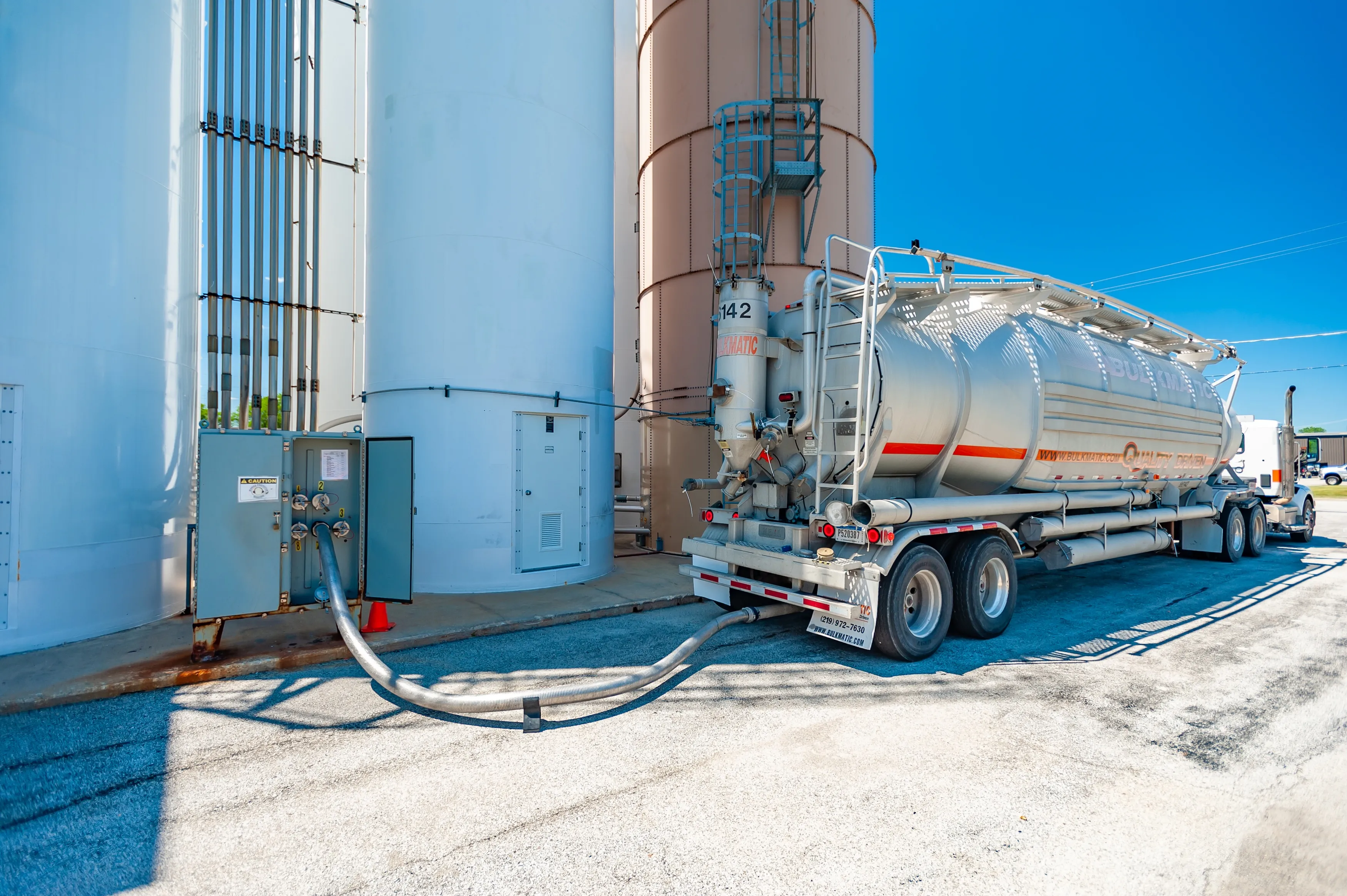
General freight networks are not designed around the demands of bulk shipping. Pneumatic trailers, liquid tanks, hoppers, end dumps, vacuum units, and other specialized equipment must be matched to the product, facility, lane, and service requirement. Carrier availability is further constrained by driver shortages, equipment limitations, operating costs, regulatory requirements, weather disruptions, and inconsistent rail service.
These conditions make a purely asset-based plan harder to scale quickly. Adding tractors, trailers, and drivers requires capital and time, while customer demand can shift by lane, product, and season. A flexible brokerage layer allows shippers to respond to volatility without sacrificing the specialized knowledge required to move bulk freight safely and reliably.
An Asset-Backed Brokerage Advantage
Specialized capacity where it is needed
Bulkmatic connects customers with qualified bulk carriers in markets where their usual providers may have limited coverage. The network extends beyond pneumatic service to include liquid bulk, hoppers, end dumps, vacuum equipment, and other bulk modes, creating options for products and lanes that may fall outside the practical reach of a single fleet.
Carrier vetting and reliability
Carrier selection is more than finding an available truck. Bulkmatic applies a rigorous vetting process intended to confirm that the carrier booked for the shipment is the carrier that arrives to move it. Partner carriers are aligned with applicable equipment needs, wash rules, customer expectations, and service requirements before they are placed on customer freight.
One point of accountability
Customers can access multiple carriers without repeatedly onboarding new transportation providers. Bulkmatic Solutions coordinates the carrier relationship, customer-service process, and shipment execution, giving the shipper one accountable partner and a more consistent operating experience.
Flexible response to disruption
When equipment or driver shortages, weather, rail service, or other operational challenges interrupt the original plan, Bulkmatic can work through its partner network to identify qualified alternatives. This flexibility supports last-minute recovery as well as planned overflow capacity.
Geographic and product-line expansion
Brokerage can help customers test new markets, serve destinations outside a core fleet footprint, and add product lines without building a new carrier network from the ground up. Where appropriate, interline solutions can also keep fleet drivers closer to home terminals while partner carriers complete the movement to final destination.
Why a Flexible Capacity Strategy Matters Now
Bulk transportation markets remain fragmented and volatile. Fuel, equipment, labor, insurance, and compliance costs can influence both carrier availability and price. At the same time, tightening capacity in specialized equipment, particularly vacuum units, and periods of inconsistent rail service can create truck demand outside a shipper’s established network.
A flexible model helps protect continuity when original transportation plans fall through. Rather than relying on a single pool of assets, customers can draw on Bulkmatic’s fleet and qualified partner carriers to support production schedules and delivery commitments. Because capacity can be added through vetted partners, customers gain options more quickly than would be possible through equipment purchases and driver recruitment alone.
This model can also improve market visibility. Ongoing carrier relationships provide perspective on lane-level capacity and pricing, helping customers evaluate alternatives and helping Bulkmatic align fleet and brokerage resources with changing conditions.
How the Model Works
- Define the shipment requirements. Equipment type, commodity, origin and destination, timing, facility requirements, and applicable wash or service expectations are identified at the outset.
- Match the load to qualified capacity. Bulkmatic evaluates its fleet and partner network to identify carriers equipped and prepared to handle the shipment.
- Confirm expectations before dispatch. The selected carrier is aligned with operating requirements and customer-specific expectations before accepting the load.
- Manage execution through one team. Bulkmatic Solutions coordinates communication and shipment support, reducing the burden on the customer to manage multiple providers.
- Adapt when conditions change. If the original option is no longer workable, the team can pursue an alternative carrier or routing strategy without requiring the customer to start a new vendor-onboarding process.
Customer Outcomes
- Continuity: Additional qualified capacity helps protect production and delivery commitments.
- Reach: A broader carrier network enables service in new geographies and across more bulk modes.
- Control: Centralized carrier management supports consistent expectations and accountability.
- Speed: Established relationships can shorten the path to capacity during urgent disruptions.
- Flexibility: Customers can change carriers or approaches without rebuilding their transportation program.
When to Consider an Asset-Backed Brokerage Partner
Shippers should consider adding an asset-backed brokerage partner when they face one or more of the following conditions:
- Core carriers cannot consistently cover a lane, season, or specialized equipment need.
- Transportation disruptions are affecting production, inventory, or customer commitments.
- New geographies or product lines require capacity outside the existing fleet footprint.
- The business wants additional options without onboarding and managing numerous carriers directly.
- Leadership needs a scalable complement to owned assets rather than a permanent expansion of fixed fleet costs.
Conclusion
Bulk shippers need more than access to trucks. They need capacity that fits the equipment, product, facility, and service requirements of each movement—and a partner that remains accountable when conditions change. Bulkmatic Solutions brings together specialized bulk expertise, an asset-backed operating perspective, and a qualified partner-carrier network to help customers extend capacity without giving up control. For urgent recovery, recurring overflow, new-market entry, or broader modal coverage, the model provides a practical path to a more resilient bulk transportation strategy.
About Bulkmatic Solutions
Bulkmatic Solutions helps bulk shippers extend transportation capacity through a combination of specialized operating knowledge and qualified partner-carrier relationships. The team supports customers seeking responsive options for overflow, difficult lanes, specialized equipment, service recovery, and network expansion.
Start a capacity conversation. Review the lanes, equipment types, service requirements, and disruption points creating the greatest risk in your network. A focused capacity assessment can identify where an asset-backed brokerage strategy may provide the fastest and most practical benefit.
